Introduction
In today’s digital world, businesses are no longer limited to traditional marketing methods such as newspapers, television advertisements, banners, and pamphlets. The internet has changed the way businesses promote their products and services. Today, companies use websites, search engines, social media platforms, and email to reach their target audiences. This modern approach is known as Digital Marketing.
Digital marketing has become an essential part of business growth. Whether you own a small business, run an online store, or manage a large company, digital marketing can help you connect with potential customers, build brand awareness, and increase sales.
In this beginner-friendly guide, we will explore what digital marketing is, its different types, benefits, and how it works.
1. What Is Digital Marketing?
Digital marketing refers to the promotion of products, services, or brands through digital channels such as search engines, websites, social media, email, and online advertisements.
Unlike traditional marketing, digital marketing allows businesses to reach people online and communicate with them more effectively. It also helps companies measure their marketing performance through website traffic, clicks, engagement, leads, and conversions.
For example, when you search for a product on Google, see an advertisement on Instagram, or receive a promotional email from a company, you are experiencing digital marketing.
The main goal of digital marketing is to attract the right audience, build customer relationships, and generate business growth.
2. Why Is Digital Marketing Important?
Digital marketing is important because most people use the internet to search for information, compare products, and make purchasing decisions.
Here are some major reasons why businesses need digital marketing:
- Wider Audience Reach: Businesses can connect with customers across different cities, countries, and regions.
- Cost-Effective Marketing: Many digital marketing methods are more affordable than traditional advertising.
- Targeted Advertising: Businesses can target audiences based on interests, location, age, and online behaviour.
- Measurable Results: Companies can track website visits, clicks, leads, and sales.
- Better Customer Engagement: Social media and email allow businesses to communicate directly with customers.
- Brand Awareness: Regular online marketing helps businesses build recognition and trust.
Digital marketing gives businesses opportunities to compete in the online marketplace and grow their customer base.
3. What Are the Main Types of Digital Marketing?
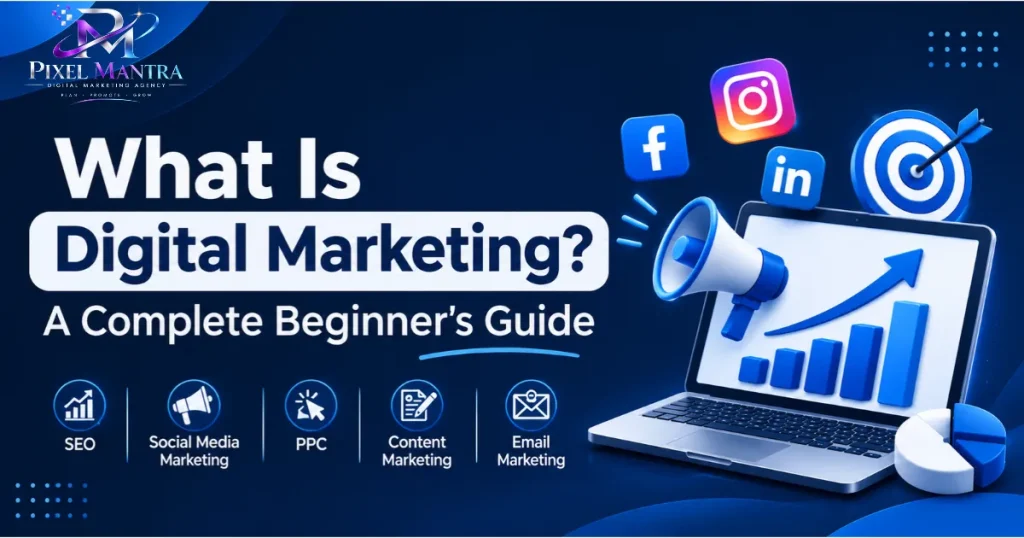
Digital marketing includes several strategies. Each strategy serves a different purpose and helps businesses achieve specific marketing goals.
A. Search Engine Optimization (SEO)
SEO stands for Search Engine Optimization. It is the process of improving a website to increase its visibility in organic search engine results.
For example, when someone searches for “best digital marketing agency,” SEO helps relevant websites appear in search results.
SEO mainly includes:
- Keyword research
- On-page SEO
- Off-page SEO
- Technical SEO
- Content optimization
SEO helps businesses attract relevant website visitors without paying for every click.
B. Social Media Marketing (SMM)
Social Media Marketing involves promoting a business through platforms such as Instagram, Facebook, LinkedIn, and Pinterest.
Businesses use social media to share content, communicate with customers, promote products, and build brand awareness.
Common social media marketing activities include:
- Creating engaging posts and reels
- Sharing business updates
- Running social media campaigns
- Responding to comments and messages
- Building an online community
An effective social media strategy helps businesses connect with their target audience.
C. Pay-Per-Click Advertising (PPC)
PPC is a type of online advertising in which advertisers generally pay when someone clicks on their advertisement.
Google Ads is one of the most popular PPC advertising platforms. Businesses can display ads when people search for specific products or services.
PPC advertising can help businesses:
- Generate website traffic
- Reach potential customers
- Promote special offers
- Increase leads and conversions
Unlike SEO, PPC can provide immediate visibility while the campaign is running, but it requires an advertising budget.
D. Content Marketing
Content marketing is the process of creating and sharing valuable information to attract and engage a target audience.
Content can include:
- Blog articles
- Videos
- Infographics
- Guides and tutorials
- Social media posts
- E-books
For example, a digital marketing agency can publish SEO guides to educate readers and demonstrate its expertise.
Quality content helps build trust, improve brand awareness, and support SEO efforts.
E. Email Marketing
Email marketing is a strategy that uses emails to communicate with potential and existing customers.
Businesses use email marketing to share newsletters, product updates, promotional offers, and useful information.
Its major benefits include:
- Building customer relationships
- Sharing business updates
- Promoting products and services
- Encouraging repeat purchases
Email marketing is a useful way to maintain communication with customers.
4. How Does Digital Marketing Work?
Digital marketing works through a combination of different online strategies that guide potential customers towards a business.
The process generally includes these steps:
Step 1: Identify Your Target Audience
Understand who your ideal customers are, what they need, and which online platforms they use.
Step 2: Set Marketing Goals
Decide what you want to achieve, such as increasing website traffic, generating leads, improving brand awareness, or increasing sales.
Step 3: Choose the Right Marketing Channels
Select suitable channels such as SEO, social media, PPC, content marketing, and email marketing.
Step 4: Create Valuable Content
Develop useful and engaging content that answers customer questions and provides solutions to their problems.
Step 5: Measure Performance
Use tools such as Google Analytics and Google Search Console to monitor traffic, engagement, and website performance.
Step 6: Improve Your Strategy
Analyze the results and make improvements to achieve better marketing performance.
5. What Are the Benefits of Digital Marketing for Small Businesses?
Digital marketing is especially useful for small businesses because it provides opportunities to reach customers without requiring a large traditional advertising budget.
Some important benefits include:
- Affordable Promotion: Businesses can start with a limited budget and expand their marketing activities over time.
- Online Visibility: SEO and social media help businesses become more visible to potential customers.
- Lead Generation: Digital campaigns can attract people who are interested in specific products or services.
- Customer Interaction: Businesses can communicate directly with customers through social media, email, and websites.
- Business Growth: Effective marketing strategies can help increase brand recognition, enquiries, and sales.
With the right planning, small businesses can build a strong online presence and compete in their industry.
6. How Can Beginners Start Learning Digital Marketing?
If you are new to digital marketing, you do not need advanced technical knowledge to get started. Begin with the basics and gradually develop your skills.
Follow these simple steps:
- Learn the fundamentals of SEO and keyword research.
- Understand how social media platforms work.
- Explore Google Ads and online advertising.
- Practice writing blog posts and creating content.
- Learn basic website development and optimization.
- Explore tools such as Google Analytics and Google Search Console.
- Work on small projects to gain practical experience.
Consistency, learning, and practice are important for developing digital marketing skills.
7. Why Choose a Digital Marketing Agency?
Managing all digital marketing activities can be challenging, especially for businesses that do not have an experienced marketing team.
A professional digital marketing agency can help businesses develop strategies, manage campaigns, improve online visibility, and reach their marketing goals.
From SEO and social media management to content creation and paid advertising, an agency provides different services under one roof.
Choosing the right agency can help businesses save time, improve their marketing efforts, and focus on their core activities.
Conclusion
Digital marketing has transformed the way businesses connect with customers and promote their products and services. From SEO and social media marketing to PPC, content marketing, and email marketing, each strategy plays an important role in building a successful online presence.
Whether you are a beginner, a small business owner, or an entrepreneur, understanding digital marketing can help you make smarter marketing decisions.
At Pixel Mantra, we believe that every business deserves the opportunity to grow digitally. With the right strategies, creative ideas, and consistent efforts, your business can build a stronger online presence and reach new growth opportunities.
Ready to grow your business online? Connect with Pixel Mantra and take your first step towards digital success.